


At 10 years old, I ran a lemonade stall at my local Saturday market, the one my mum had traded at since I was small enough to sit under her trestle table with a colouring book. I showed up every week with $100 in my float, paid my own rent on the stall, and took home between $200 and $300 by the end of the day. Whatever I had left over, I spent at other stalls, buying from the people who traded alongside me.
I didn’t know it at the time, but I was learning the things that matter most in business: how to manage money, how to earn trust, and why it pays to look after the people around you.
That instinct hasn’t changed. The scale has.
The SEO Industry I Walked into and How Fast It’s Moved
Digital marketing isn’t the same industry it was five years ago when I started. It’s not even the same industry it was 12 months ago.
When I came into this space, the conversation was largely about search rankings, click-through rates, and keyword strategy. Those things still matter. But the ground has shifted. AI is fundamentally changing how people find information and brands, and how businesses need to show up online.
Search is no longer just about ranking on Google. It’s about being present and credible in AI-generated answers, in tools like ChatGPT, Claude, and Perplexity, in the responses that people now trust as much as a traditional results page. Generative Engine Optimisation, AI search readiness, and agentic SEO are not future-facing concepts anymore. They are the work that needs to happen right now.
This shift is where my focus sits. And it’s where Pure SEO is at the forefront in New Zealand.
What Watching SEO Agencies from the Inside Taught Me
I’ve worked across agencies of different sizes and different structures over the years. Some were exceptional. Some cut corners. All of them taught me something.
The pattern I kept seeing was agencies that had every reason to be great, choosing not to be. Clients that are given just enough to keep them quiet, but never enough to genuinely move the needle. People who were treated like line items instead of partners.
That’s not the model I want to build. You can’t give someone watered-down lemonade and expect them to keep coming back. The same principle applies here; it’s just that the stakes are higher.
The brands that will win in this next chapter of search are not the ones with the biggest budgets. They’re the ones with the clearest strategy, the most credible content, and the strongest signal of authority in their category. Getting there takes honesty, real expertise, and someone who’s willing to tell you what you actually need, not just what’s easy to sell.
Where Search Is Going and What It Means for Small Businesses
AI search is moving fast, and most businesses aren’t ready for it.
42% of senior marketers in New Zealand have flagged AI and automation as a top challenge for 2026. The anxiety is understandable. But the opportunity is significant for the brands that act early.
Being found in AI-generated answers requires a different approach than traditional SEO. It’s about building topical authority, earning citations from credible sources, structuring content in ways that AI models can understand and reference, and ensuring your brand is positioned as the trusted answer in your category, not just a link on a page.
Performance media is evolving alongside it. The signals that inform paid campaigns are becoming more sophisticated, and the businesses seeing the strongest returns are those connecting their paid and organic strategies with clean data and a clear commercial framework.
That’s the work. And it’s the work I’m here to lead.
Small Businesses Need Enterprise Thinking
The story of AI search tends to only talk about big brands, big budgets, and what the largest companies in the world are doing to adapt. That version leaves out the businesses I care about most.
Small businesses need someone in their corner. Not someone who’ll give them a watered-down version of what the big players get, but someone who’ll take the same strategic frameworks, the same data-driven thinking, the same rigour that enterprise brands have access to, and translate it into something that actually works at their scale.
That’s a gap I’ve watched agencies fail to close, not because they couldn’t, but because they chose not to. Small business clients are often less glamorous, less logo-worthy, and more time-intensive per dollar of revenue. So they get the junior team, the templated strategy, and the monthly report that tells them very little. I’ve seen it too many times, and it’s one of the things that drives me most.
The reality is that the changing landscape, AI search, shifting media costs, and new competitors entering markets every month not only affect large organisations. In many ways, small businesses feel it more acutely.
When the cost per click rises, it’s not an inconvenience for a small business owner. It’s a material hit to their revenue. When a competitor with a bigger budget enters their space, they can’t simply outspend them. They have to outsmart them. And when AI starts answering questions that used to send traffic to their website, they need to understand what that means and what to do about it.
Getting it wrong is expensive. Getting it right is one of the most powerful growth levers a small business has, and that money, often a meaningful percentage of total revenue, deserves real care and genuine expertise.
Values-Driven Leadership Is a Competitive Advantage
Our industry talks a lot about innovation. It’s less comfortable talking about culture, ethics, and what it actually means to put people first.
I believe that values-driven leadership isn’t a risk. It’s a competitive advantage.
You can be honest, be kind, put your clients and your team first, and still win. That’s not idealism. That’s just good business. The lemonade stand taught me that at 10, and every agency I’ve worked in since has confirmed it.
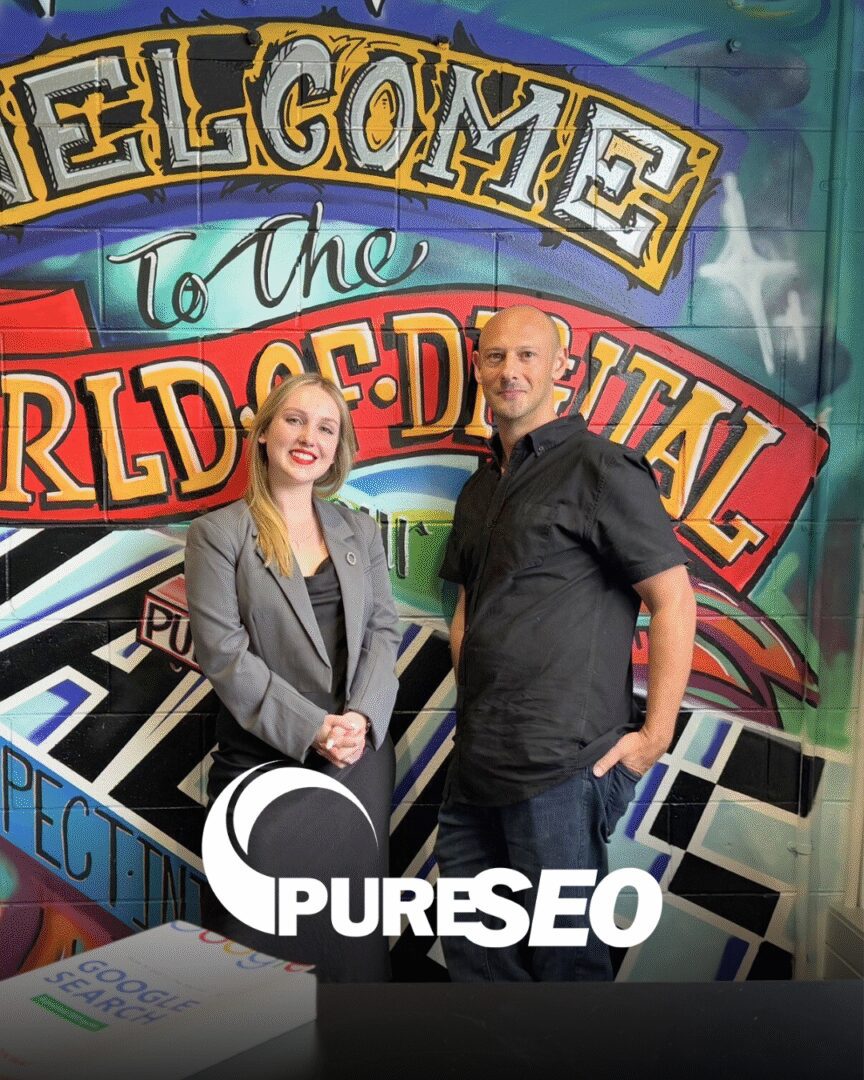
As Head of Pure SEO, I want to build something that reflects that. A team that genuinely cares about outcomes. A client experience that feels like a real partnership. And a body of work that proves you don’t have to choose between doing things well and doing things right.

The Work Starts Now
Search is at an inflexion point. The agencies and brands that understand what AI search means for discoverability and move with clarity and speed will have a significant advantage over those who wait and see.
I’m not selling lemonade at the markets anymore, but those instincts are still there. It’s just a considerably bigger stall.
If you’re trying to figure out what AI search means for your small business, I’d love to talk.
Ruby Hewitt is the Head of Pure SEO, one of New Zealand’s longest-standing specialist search agencies. She leads client delivery, team development, and the agency’s strategic direction across technical SEO, performance media, and AI-powered search.